Surfaces Designed for Year-Round Vehicle Traffic
Epoxy Garage Floor Installation in Raleigh for concrete slabs showing oil stains, surface dusting, and moisture-related deterioration
Bare concrete garage floors absorb petroleum products, release dust as the surface erodes, and show tire marks that won't scrub clean after years of daily vehicle traffic—all problems that epoxy coatings eliminate by sealing the porous concrete surface completely. Storm Hawk Roofing & Restoration installs epoxy flooring systems throughout Raleigh garages where homeowners want surfaces that resist chemical spills, clean easily with simple mopping, and maintain appearance despite constant use. The coating bonds directly to concrete at the molecular level, creating a wear layer far more durable than paint-based products that peel when tires turn sharply or when hot tires rest on the surface.
Installation begins with aggressive surface preparation—diamond grinders remove any existing coatings, open concrete pores for mechanical bonding, and level high spots that would create thin areas in the finished coating. Acid etching or mechanical profiling creates the texture needed for epoxy adhesion, since smooth concrete won't hold coatings long-term. Multiple epoxy layers build thickness, with optional color flakes broadcast into wet coats to hide minor imperfections and add slip resistance.
Schedule a free epoxy flooring consultation to evaluate your garage slab and discuss color and finish options.
The Difference Between Epoxy and Standard Coatings
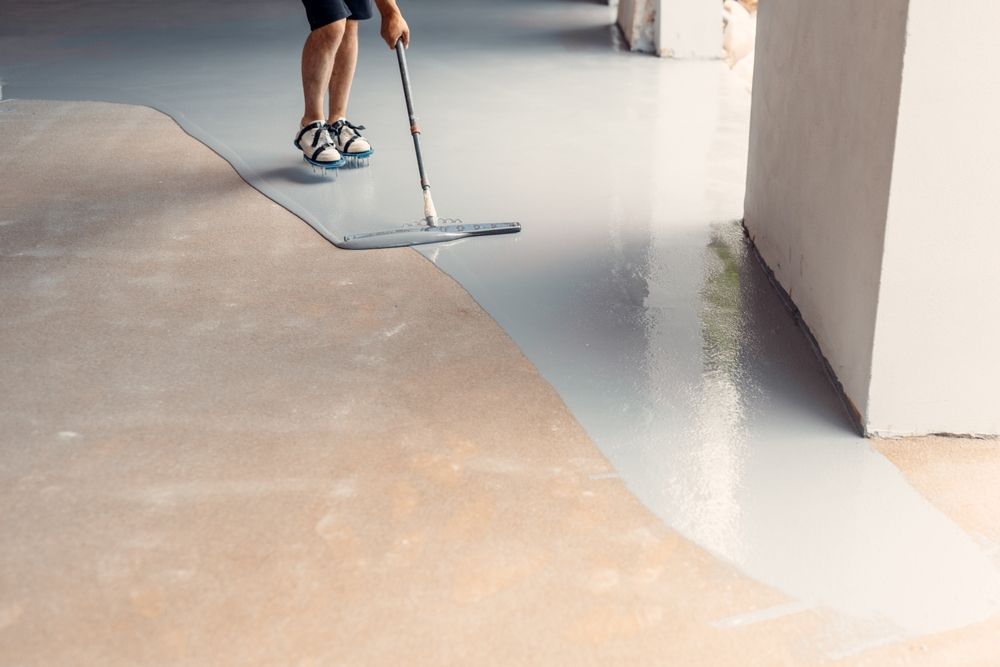
True epoxy systems use two-part formulations mixed on-site, which chemically react to form rigid, bonded layers rather than sitting atop concrete like paint films do. Installers apply base coats, broadcast decorative flakes if desired, then seal everything with clear topcoats that provide UV resistance and additional abrasion protection. Curing requires controlled temperatures—too cold and the epoxy remains tacky, too hot and it sets before installers can spread it evenly—which is why application happens during moderate weather when concrete temperatures stay between fifty and eighty degrees.
You'll notice a glossy, uniform surface that makes the entire garage appear cleaner and brighter, floors that wipe clean of oil drips and dirt without scrubbing, and a finish that resists hot tire pickup where vehicles park daily. Water beads on the surface rather than soaking into concrete, and dropped tools or equipment won't chip or damage the coating the way they crater bare concrete.
Epoxy installation includes concrete surface preparation, crack filling, base coat application, optional color flake broadcast, and clear topcoat sealing. It does not include repairing structural concrete damage, leveling severely uneven slabs, or coating surfaces with active moisture intrusion from below.
What Property Owners Usually Ask
Questions about durability, maintenance, application timing, and how epoxy compares to other garage flooring options come up during most consultations in Raleigh.
How long does epoxy flooring last under daily vehicle use?
Properly installed systems maintain appearance and protection for ten to fifteen years in residential garages, with wear concentrated in turn areas where tires scrub the surface more aggressively than in straight traffic paths.
What surface preparation does concrete require before epoxy application?
Crews grind the slab to remove contaminants and open pores, repair cracks with epoxy filler, and verify moisture levels are low enough for coating adhesion, since excess moisture vapor will push epoxy layers off the concrete from underneath.
When can vehicles return to the garage after installation?
Light foot traffic is safe after twenty-four hours, but full vehicle weight should stay off the surface for seventy-two hours to allow complete curing, with final hardness developing over the following week as the chemical reaction finishes.
Why do some epoxy floors peel while others last decades?
Inadequate surface preparation leaves oils or smooth concrete that prevents bonding, moisture vapor from below pushes coatings off, or installers use single-part products marketed as epoxy but actually formulated as acrylic paints that can't handle the stress.
What maintenance does epoxy flooring need?
Regular sweeping or dust mopping removes grit that could scratch the surface, and occasional damp mopping with mild detergent keeps the finish clean without requiring harsh chemicals or scrubbing.
Storm Hawk Roofing & Restoration uses professional-grade epoxy systems and surface preparation equipment to ensure coatings bond permanently to your concrete slab. Set up a consultation to review your garage conditions and receive specific recommendations for coating systems that match your use patterns and aesthetic preferences.